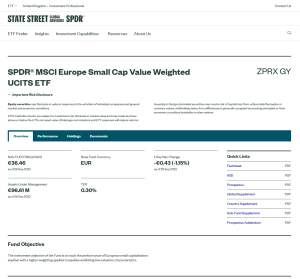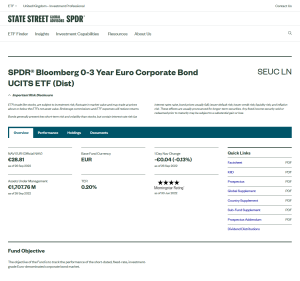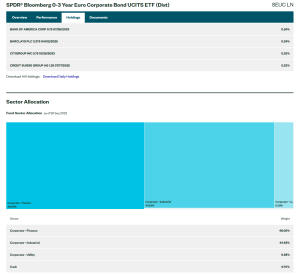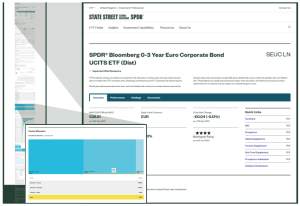
Global Redesign of State Street Global Advisors Product Pages
Organization:
Role:
Timeline:
Impact:
State Street Investment Management
UX Lead – Product Designer Lead (Managed a 10-person cross-functional team)
6–9 Months (Accelerated from a typical 2–3 year cycle)
Moved from 67th to 2nd in global brand rankings; 30% reduction in bounce rate; 188% increase in product page visits
01. The Strategic Challenge
Reclaiming Market Position through Design
SSGA was facing a critical digital decline: product pages suffered from low user visits and were no longer aligned with the standards set by global competitors. My task was to lead a strategic initiative to completely redesign these pages and deliver a unified global solution
The Problem:
Low Engagement: High bounce rates (70%) and stagnant traffic.
• Missed Revenue: The existing journey lacked a clear path to conversion or sales team integration.
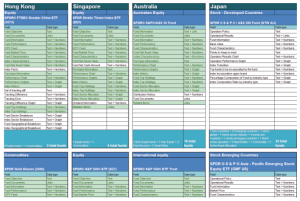
• Global Inconsistency: The solution needed to scale across diverse markets, from 3 funds in Hong Kong to over 350 in the USA
02. Research & Diplomacy
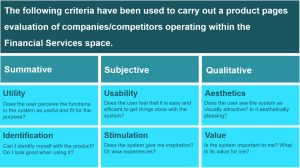
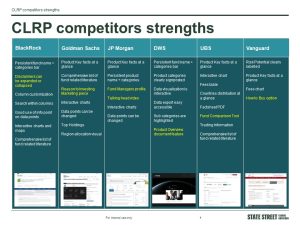
I began by mapping the current experience and identifying customer pain points, risks, and goals. To gain a competitive advantage, I conducted an extensive Heuristic Review and Content Audit of industry giants including BlackRock, Goldman Sachs, JP Morgan, and Vanguard.
Key Discoveries:
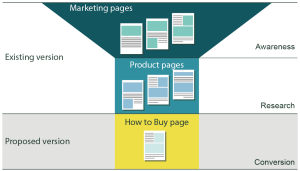
• The Sales Gap: Research revealed a major opportunity to add a sales step, allowing users to contact the sales team directly a feature previously absent.
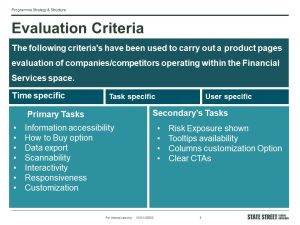
• The Differentiator: While competitors were strong in “at-a-glance” info, we identified Data Visualisation as our key differentiator to provide a superior user experience.
• Personas: We developed task-driven archetypes, such as Jonathon (Financial Advisor) and Richard (Pension Trustee), to ensure every design decision met specific user goals.
03. Strategic Orchestration
The Lean & “Atomic” Approach
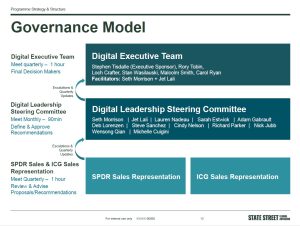
To meet an aggressive 6–9 month deadline, I adopted a Lean UX methodology and utilized Design Sprints. By bringing Technical, Legal, Risk, and Product owners into a single room, we eliminated communication silos and expedited decision-making.
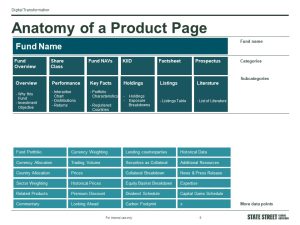
Modular Scalability: I implemented an “Atomic” Design Strategy. We built flexible, modular components that functioned like elements in a periodic table.
• Rapid Scaling: Reusable building blocks allowed us to build at scale quickly.
• Commercial Efficiency: Design modules could be repurposed for new systems, reducing long-term costs
04. Design & Execution
From Sprints to Staging
We worked iteratively, producing just enough design to validate our theories with stakeholders.
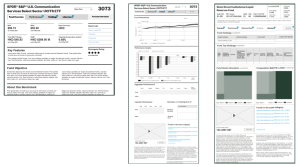
• Hi-Fi Wireframes: By outlining all information requirements first, we stayed “design agnostic,” allowing us to share layouts rapidly with stakeholders without getting bogged down in UI finessing.
• The Global Prototype: We developed a working prototype in the DEV environment to support design enhancement and demonstrate the solution to project sponsors.
• Visual Comps: Collaborating with the Branding Team, we established new UI patterns that eliminated “visual clutter” and focused on clean, simple interactions
05. The Impact
Measurable Global Transformation
The redesign delivered immediate, record-breaking results for State Street Global Advisors:
• Global Ranking: Surpassed 98 other asset managers to move from 67th (2019) to 2nd (2023/2025) in the Living Group Brand Ranking.
• Retention: Bounce rate plummeted from 70% to 40%.
• Traffic Growth: Total website visitors grew from 4.1M to 7.5M annually.
• Conversion Intent: Product page visits surged from 1.8M to 5.2M, representing a massive increase in high-intent user traffic
06. Senior Reflections
Leadership in Complexity
Managing a global redesign of this scale required balancing the needs of over 350 funds with a desire for simplicity. By focusing on a modular system and iterative testing, we delivered a product that was not only visually attractive but also strategically monetized the user journey through the new sales funne